
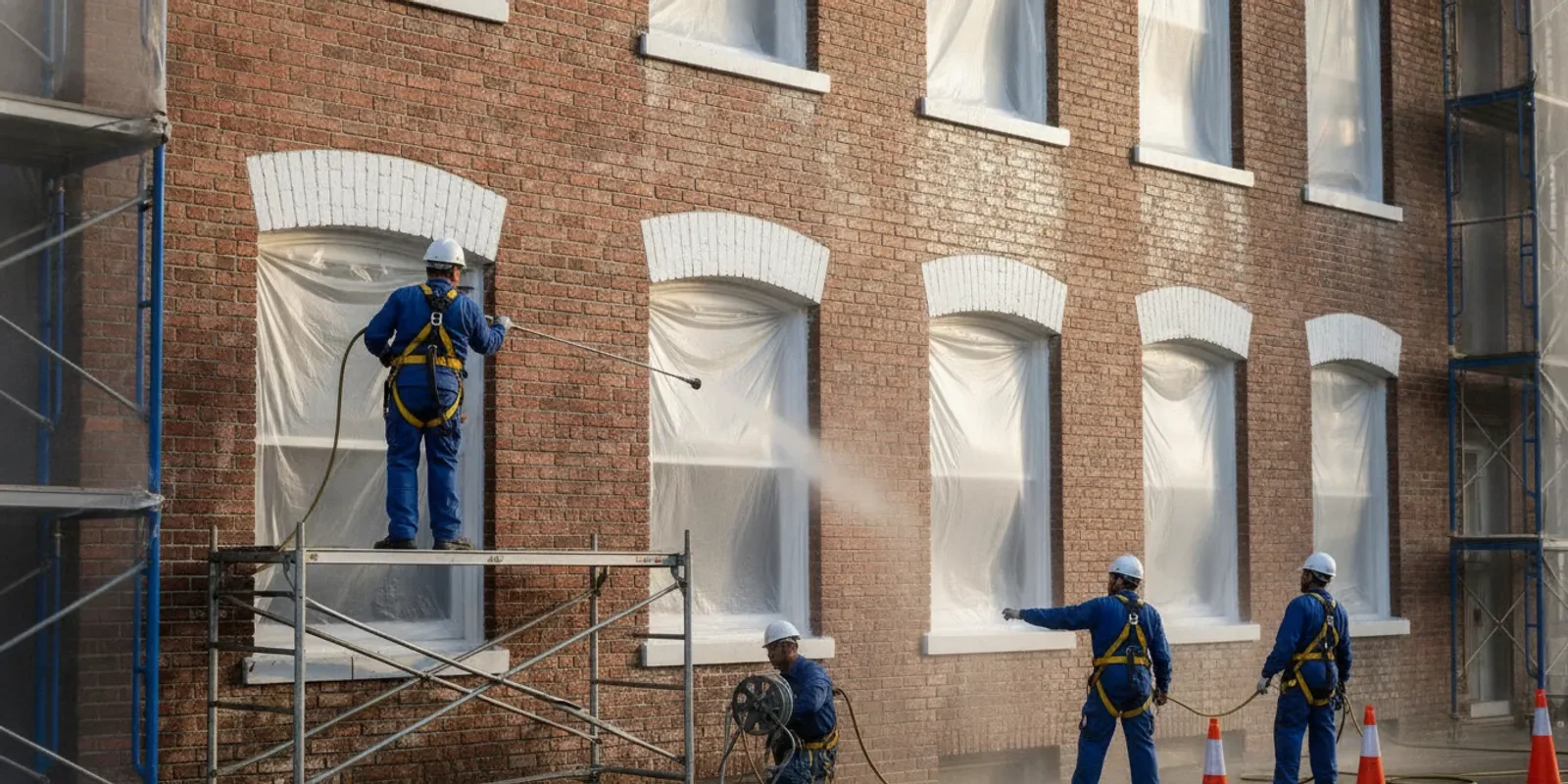
Commercial building power washing can be a useful preparation step before painting, but it is not automatically required for every property or every surface. The right decision depends on what is on the building, the condition of its existing coating, and the work planned next. Property managers, HOA and condominium boards, facilities teams, and commercial owners should treat washing as one part of a coordinated sequence: inspect, define the scope, clean where appropriate, allow surfaces to dry, address repairs, and confirm readiness for coating.
Request a free onsite estimate
When should a commercial building be power washed before painting?
Consider washing when dirt, dust, pollen, chalking residue, or other surface contamination could interfere with inspection and preparation. Cleaning can remove loose soil and help reveal coating failures or damaged components that were hard to see. It should happen early enough in the project to leave room for drying, reinspection, repairs, and any preparation specified for the surface and coating system.
The word âpower washingâ should not be taken to mean that maximum pressure belongs everywhere. A suitable method depends on the substrate, existing finish, condition, and nearby joints or openings. One elevation may need a different approach from another. A sound plan also recognizes that washing does not replace scraping, sanding, removal of unsound material, caulking, repairs, or correction of water entry.
For a managed property, begin with an inspection rather than scheduling a wash by habit. If the surface is already clean and sound, washing may not be the critical preparation step. If contamination is visible, determine where it is concentrated and whether cleaning is suitable for the material. Then coordinate it with painting, repair work, access needs, and the property's operating schedule.
What does washing accomplish in a painting project?
Exterior surfaces collect soil and residue from weather, landscaping, nearby roads, building activity, and normal use. That material can obscure the condition of paint or remain on the surface during preparation. Appropriate cleaning helps create a clearer basis for inspection and the next work steps. It can also expose peeling coating, open joints, damaged trim, or staining that was not obvious before.
Washing is not a guarantee that a surface is paint-ready. A clean-looking wall may still have loose coating, a weak substrate, failing caulk, moisture concerns, or areas requiring primer or repair. Conversely, a dark stain may need evaluation rather than stronger pressure. Cleaning removes certain contaminants; it does not diagnose every underlying cause.
Think of washing as a stage gate. Before it, the team identifies the building areas and risks. After it, the team checks whether the surface is dry and what further preparation remains. This distinction matters when comparing proposals. A line item for âwash exteriorâ says little unless it clarifies what areas, methods, protections, and follow-up checks are included.
How should a property team decide whether washing is needed?
Walk the property systematically. Look at each elevation, major material, exposure, and use. A sheltered wall beneath an overhang may be cleaner than a wind-exposed side near a roadway. Shaded locations, entry zones, loading areas, and places close to landscaping can have different visible conditions. Avoid assuming that an observation on one wall applies to the whole property.
Record contamination. Note visible dirt, pollen, chalking residue, biological-looking growth, or deposits. Mark where each condition appears and how extensive it seems.
Check coating condition. Identify peeling, blistering, loose paint, or a finish that appears to have failed. These findings call for preparation decisions, not just washing.
Separate materials. List masonry, concrete, painted metal, wood, siding, and trim separately. Different materials or conditions can require different cleaning approaches.
Note vulnerable details. Record windows, doors, vents, joints, fixtures, and areas where water might enter or collect. Include damaged or open details.
Consider use and access. Mark entrances, accessible routes, parking, deliveries, equipment, and occupied areas that need protection or scheduling.
Make the inspection useful by connecting observations to locations. A simple elevation sketch can identify north, south, east, and west faces, then label the affected areas. Photos should include a building or elevation identifier and a short note about what they show. If several buildings are involved, use the same checklist for each and record exceptions. This avoids vague findings such as âsome dirt on the exteriorâ and helps the team decide whether cleaning is needed everywhere, in selected zones, or not at all.
Separate what is visible from what is suspected. For example, a manager may see peeling paint near a window and a discolored area below it. The records can state those observations without claiming to know whether water entered behind the assembly. Ask the project team to evaluate the condition and explain whether the proposed cleaning could affect it. Clear observations support a better scope without turning an initial walk-through into a technical diagnosis.
What sequence should come before and after washing?
A reliable schedule leaves time to discover conditions and make decisions. The exact steps depend on the property, but a useful planning sequence is:
Inspect and document. Map the elevations, materials, visible contamination, coating condition, water-sensitive details, and access constraints.
Define the work areas. Decide which surfaces need cleaning, which need another preparation method, and which require repair or further evaluation.
Agree on protection and communication. Identify affected entrances, pedestrian paths, parked vehicles, landscaping, fixtures, and occupant notices.
Clean with a suitable method. Match the approach to the actual substrate and condition. Do not assume that one pressure or technique belongs on every component.
Allow the surface to dry. Use the observed site and project requirements to determine when the next step can proceed. A fixed wait is not suitable for every material or weather condition.
Reinspect and prepare. Check for newly visible damage and complete the defined removal, repair, caulking, or other surface preparation.
Confirm coating readiness. Coordinate the painting schedule with the surface condition and the requirements for the planned coating system.
The most important scheduling choice is not a universal number of hours between washing and painting. Drying depends on material, joints, shade, airflow, weather, and how much water was used. The team should assess actual conditions and follow the requirements applicable to the project. A schedule that leaves no room for reinspection creates pressure to paint before questions are resolved.
Cleaning can reveal deteriorated wood, failed joints, loose coating, or other conditions not clearly visible at the initial visit. Decide in advance how those discoveries will be documented and who can authorize a scope change. The owner or manager should know whether repair work is included, excluded, or subject to a separate review. This protects the schedule from an unplanned assumption that every newly visible issue is already covered.
How does the surface affect the cleaning approach?
A commercial property can combine many materials on one elevation. The building's use does not determine a single cleaning method. Instead, the team should consider the substrate, coating condition, detail geometry, and surrounding components. A fragile area may need gentler treatment, while a different, robust surface may be approached another way. The work plan should identify these differences rather than hide them under a generic label.
Painted wood and trim
Painted wood and trim deserve close attention when coating is peeling, joints are open, or the material appears deteriorated. Water should not be forced into gaps or used in a way that worsens a damaged component. If the inspection identifies rot or failed caulk, flag it for evaluation and repair planning. Washing does not restore deteriorated wood or seal an open joint.
Where trim meets siding, masonry, or a window, note the transition and how it will be handled. A narrow detail can behave differently from a broad flat surface. The team should also distinguish cleaning from later preparation: loose paint may still need removal, and repaired areas may need their own preparation before coating.
Masonry and concrete
Masonry and concrete vary in texture, porosity, condition, and previous treatment. Inspect for cracks, loose material, stains, and existing coatings before choosing a method. Avoid directing water into vulnerable joints or openings. If the building has a specialized finish or an unusual substrate, establish the appropriate preparation requirements before work begins rather than relying on a generic setting.
Stains also need context. A visible mark may be ordinary surface soil, or it may relate to another building condition. Stronger pressure is not automatically the right response. Record where the stain occurs and ask whether it requires a different cleaning process, a repair, or further assessment.
Siding and metal components
Siding profiles, painted metal, and trim details can respond differently to spray direction and pressure. Water directed behind cladding or into joints can cause problems. Identify transitions, seams, and vulnerable openings and establish how the crew will avoid forcing water into them. If siding repairs are also planned, coordinate that work with cleaning and painting so that the sequence does not undermine the repair.
A mixed-material elevation may call for several methods and a clear boundary between them. The scope should make it possible to tell which components are included and what happens at transitions. Middledorf lists painting along with roofing, siding, and carpentry work such as PVC trim and rot repair. The services overview and painting services information can help frame a discussion about related work; confirm the specific scope for the property.
How should cleaning fit into an occupied property schedule?
Washing affects people as well as surfaces. Residents, tenants, visitors, employees, customers, delivery drivers, and neighboring occupants may need to move through or near the work area. Before work begins, decide how the property will maintain necessary access and communicate temporary changes. At a multi-building site, sequencing one building, entrance, or elevation at a time may be more practical than disrupting every area at once.
Identify primary entrances, accessible routes, loading areas, and emergency access that must remain usable.
Determine how temporary restrictions and changes will be communicated to occupants.
Plan protection for vehicles, landscaping, outdoor furnishings, fixtures, and adjacent surfaces that could be affected by water or debris.
Coordinate around deliveries, operating hours, resident events, and other scheduled work.
Set a clear contact process for access questions or unexpected conditions on the workday.
For an HOA or condominium community, explain the sequence in direct language. Tell residents which building or side is affected, what access changes to expect, and where to direct questions. If vehicles need to be moved or an entry must be temporarily avoided, communicate that with enough clarity for people to act. Do not assume that a notice sent to one building reaches everyone who needs it.
For offices, schools, religious institutions, and other commercial facilities, account for employees, customers, visitors, deliveries, and operational requirements. The best sequence depends on how the property functions. Do not promise that every project can be performed after hours or on weekends; establish timing for the actual site and scope.
A work log helps when the project is interrupted by weather or a newly discovered condition. Track the building and elevation, date, completed work, open questions, and next planned step. Give the designated property contact a way to report access concerns. Middledorf's HOA and condominium information describes its managed-community context, while its capital-improvement information is relevant when painting is part of a broader property plan.
What should a washing and painting scope specify?
A useful scope makes the work understandable to the owner, manager, and contractor. It should connect the cleaning task to the planned preparation and avoid suggesting that one method fits every surface. Ask the proposal to identify:
Included areas. Name buildings, elevations, and components. âWash exteriorâ alone may not define the boundaries.
Reason for cleaning. State the observed condition or preparation goal that makes cleaning appropriate.
Method by surface. Explain how materials and fragile areas will be treated, and identify exclusions.
Protection and access. Describe how entrances, landscaping, nearby property, and pedestrian routes will be handled.
Drying and readiness. Explain how the team will assess readiness for the next step instead of promising one universal waiting period.
Repairs and discoveries. Distinguish included work from conditions requiring review, approval, or a separate scope.
Sequence and communication. Identify the planned order, responsible contact, and how schedule changes will be shared.
Closeout records. Define how completed areas and remaining observations will be noted.
Consider a proposal that states âpower wash all buildingsâ without listing materials or access plans. Ask the contractor to walk through how that instruction applies to painted wood trim, masonry, metal doors, and damaged joints. A revised scope might clarify that some areas receive a different method or are excluded pending repair. The point is not to prescribe a technical setting yourself; it is to make sure the decision is deliberate, bounded, and connected to the painting plan.
It is also useful to distinguish the cleaning scope from the coating scope. Does the painting work include removal of unsound material? Are repairs and caulking addressed, or do they need separate authorization? Who reviews an unexpected condition? When are the property contact and occupants notified of a change? These questions help prevent disagreements later about whether a clean surface was supposed to mean a repaired, prepared, and paint-ready surface.
How can a multi-building project be organized?
On a campus or managed community, buildings can differ in material, exposure, use, and condition. A single instruction for every building may overlook those differences. Begin with an inventory, then group buildings or elevations only when the observed conditions and work requirements are genuinely similar. Keep exceptions visible rather than forcing them into a standard category.
A tracking sheet can include building identifier, elevation, surface type, visible contamination, coating condition, cleaning decision, access notes, repair flags, and readiness status. Add a separate field for owner decisions so that unresolved items do not disappear into general notes. The sheet can also record the person responsible for reviewing a finding and the date that a decision is needed.
For example, imagine a community with several residential buildings and shared entries. The first walk-through finds that a shaded rear elevation has visible soil, while a more exposed wall has areas of peeling paint and an open trim joint. The cleaning decision should not be copied from one wall to the other without review. The team can identify the visibly soiled area for an appropriate cleaning plan, flag the peeling coating and joint for preparation or repair decisions, and coordinate resident notices by building. The scenario illustrates a planning method, not a claim about a particular Middledorf project.
When painting is part of a larger property plan, connect washing with repair scope, color decisions, staging, resident communications, and the schedule. If an existing reserve plan informs timing, use it as context; do not assume that every cleaning or painting task is reserve-funded or that the contractor writes the reserve study. Establish the board or owner approval path before work expands beyond the agreed scope.
Middledorf's company-published work includes an Arlington condominium project involving trim and painting across 45 buildings and a phased repaint plan, as well as a Bethesda siding project involving ten buildings. These descriptions show the types of multi-building contexts the company reports; they do not mean every property has the same conditions or result. The Arlington project information offers one company-published example.
What risks should the team address before washing?
Water, equipment, and work at height call for deliberate, site-specific planning. The responsible project team should identify hazards and suitable controls for its workers, equipment, surfaces, and occupants. This article is not a substitute for a safety plan or technical instructions for a specific material. The practical role of the property manager is to raise the site's conditions early and clarify who is responsible for the relevant controls.
Water entry. Identify openings, joints, vents, and damaged areas where water could enter. Plan protection and avoid directing spray into vulnerable details.
Wet walking surfaces. Consider slippery routes, hoses, equipment placement, and alternate paths for residents, workers, and visitors.
Nearby property. Decide how vehicles, landscaping, fixtures, and adjoining surfaces will be protected from water and loosened debris.
Electrical or mechanical details. Identify equipment and connections that require protection or a work restriction before water is used nearby.
Unexpected damage. Agree how the crew will pause, record, and report a condition that changes the method or scope.
Weather and drying also affect the plan. Wind can change where water travels; shade and airflow can affect drying; rain can disrupt the intended sequence. A calendar date should not override unsuitable site conditions. Build in a way to communicate adjustments to occupants and decision-makers, especially when access arrangements or notices need to change.
How does washing relate to painting and repairs?
Cleaning belongs within a coordinated exterior project. If the inspection identifies peeling paint, failed caulk, damaged trim, or signs of wood rot, those conditions need evaluation and an agreed response. Painting over an unresolved defect does not correct the underlying issue. Similarly, a newly cleaned surface may reveal preparation needs that were not apparent during the first walk-through.
Set the sequence among cleaning, repairs, surface preparation, and coating before work begins. A building may need localized repairs before painting; broader siding or carpentry work may affect which components are cleaned and when. Keep the owner or manager informed if a discovery changes access, schedule, or scope, and obtain the appropriate approval before expanding work.
The buyer's process changes with the property. A homeowner considering one exterior can focus on that home's surface condition and painting scope. A board or property manager must also plan around multiple buildings, resident communication, and approvals. In either case, an onsite review can help clarify what cleaning and preparation are appropriate instead of assuming every exterior needs identical treatment.
What should you ask before hiring for the work?
Questions are most useful when they connect the proposed cleaning to the actual building and painting plan. Ask:
Which buildings, elevations, and components are included, and which are excluded?
How will the approach account for wood, masonry, siding, metal, and damaged areas?
What preparation remains after washing, and how will the team assess the surface?
How will drying and readiness for painting be determined?
How will openings, joints, landscaping, vehicles, and pedestrian routes be protected?
What happens if cleaning reveals rot, failed caulk, loose paint, or another condition beyond the agreed scope?
How will work be sequenced around residents, tenants, customers, and normal operations?
Who communicates schedule changes and records completed areas?
Use the answers to compare scope and coordination, not just the phrase âpower washing.â A proposal that identifies the work areas and explains how cleaning fits into preparation is easier to evaluate than a broad line item. If the property needs a wider review, discuss painting and relevant repair needs together while keeping each part of the scope clear.
Review Middledorf painting services
What is the practical takeaway?
Plan commercial building power washing as a condition-based preparation step, not as a fixed requirement or a cure-all. Inspect first, choose a method suited to each surface, protect people and nearby property, allow for drying, and leave time to address what cleaning reveals. A clearly defined sequence helps property teams coordinate painting, repairs, approvals, and operations with fewer assumptions.