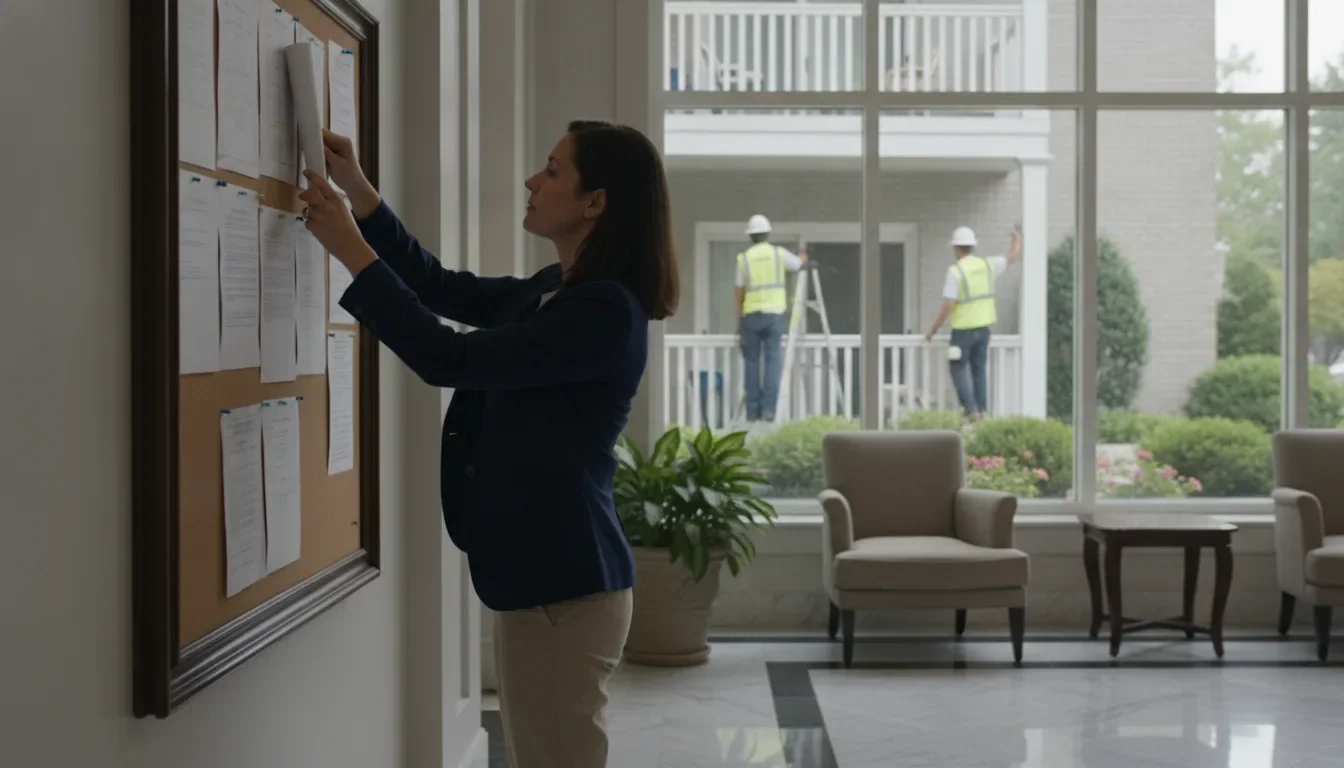
Communicating HOA painting projects to residents is the work that keeps an occupied community usable while crews paint. Residents do not need the bid packet. They need to know which building is next, what they must move, which doors and parking spots change, and who answers a question the same day. When that message is late or different on the portal than it is on the lobby board, the project looks unmanaged even if the paint is going on correctly.
Call (301) 892-8993 to schedule a free onsite estimate for a community-wide exterior painting project. A manager or board can walk the buildings with us and turn the scope into a resident notice plan before work starts.
Communicating HOA painting projects to residents before work starts
A useful notice answers five questions in the first screen: what is being painted, where, when, what the resident has to do, and who to contact. Scope comes first. Name the buildings, elevations, and shared surfaces in this phase, such as siding, trim, doors, shutters, and railings. If common areas are in the same mobilization, say so. If a clubhouse, lobby, or stairwell is not in this phase, say that too. Silence reads as "everything is included."
Access is the second item. Tell people which balconies, patios, walkways, gates, and parking rows the crew needs clear, and on which dates. Timing is third. Give a phase window, not a promise that Building C starts at 8:15 a.m. on a Tuesday. Weather, wet surfaces, and repair discoveries move exterior work. Disruption is fourth. Name work hours, expected noise, odor near open windows, and any temporary path around staging. The contact is fifth. One named person, one phone or email, and the hours that person actually answers.
Managers comparing finished communities can look at completed HOA and commercial projects before they write the first notice. That package is different from the planning work a board does months earlier. Repaint cycles, reserve timing, color standards, and how to compare proposals belong in HOA exterior painting planning. This note is only the resident-facing layer of a plan the board has already accepted.
Build one notice sequence, not a stream of updates
Managers get better compliance from a short sequence than from a new message every time a crew moves a ladder. Four notices cover most occupied exterior projects. Each one has a job. None of them repeats the whole specification.
| Notice | When to send it | What it must say |
|---|---|---|
| Preview | When the board has a phase plan, before any staging. | Why the work is happening, which buildings are in the first phase, and that dates will firm up closer to mobilization. |
| Start | Several days before the crew arrives at that building. | Dates or date window, work hours, what to move, parking or path changes, and the contact. |
| Shift | The day a date, building order, or access rule changes. | What changed, what did not, and the next confirmed step. Do not restate the whole project. |
| Close | When that phase is done and the area is back in use. | What was completed, what remains for a later phase, and how to report a punch item. |
Send the same four notes through the channels residents already use. A portal post that the email does not match will generate the calls you were trying to avoid. Posted paper still matters at entries, mail rooms, and elevator lobbies, because not every owner reads email and not every resident is an owner.
Keep a single source the crew can see. Middledorf's published pre-job review covers schedule, work areas, parking, staging, and communications with the project manager before production starts. If the field plan changes, the resident note changes the same day. A notice that still lists yesterday's building is worse than no notice.
Say what is in scope, and what is not
Most resident friction on an HOA paint project is a scope misunderstanding. Someone sees a lift at the front elevation and assumes their patio ceiling, personal storm door, or fenced screen is included. Someone else assumes a color change is still open for a vote. Write the boundary in plain language.
Included in this phase. List buildings or stacks, and the shared surfaces: siding, trim, shutters, rails, and exterior doors if those doors are association property.
Not included. Name the common exclusions you already know, such as owner-installed screens, personal decorations, interior walls, and buildings scheduled for a later year.
Repairs that may appear. Rot, failed caulk, and loose trim often show up once old paint comes off. Tell residents that a repair may pause one elevation while the rest of the phase continues. Do not promise a completion day for a repair you have not opened up.
Color. If the board has approved a standard, say the standard is set and where a resident can see the chip or the rendering. Do not invite a new color debate in the project inbox.
On a multi-building community, phase language prevents the "why is my building last" thread from becoming the project. The Arlington condominium trim project Middledorf has published is a useful picture of scale, not a template: rotten trim across 45 buildings, phased so each section was repainted on a rotating cycle. Your notice should say which section is this year's work and which sections are not. It should not imply every community uses a four-year cycle or a published project cost.
If the board is still choosing buildings, colors, or a reserve year, stop and finish that decision on the planning side. A resident notice cannot paper over an open scope. The HOA and condo painting work we do with boards starts from that coordinated scope: consistent finishes across buildings, resident coordination, and repairs planned alongside the association's existing reserve study. We do not write the reserve study.
Explain access and disruption before the lift arrives
Residents cooperate when the ask is specific and short. "Please accommodate the painters" produces patio furniture left in the work zone. A clearer note gets the rail clear. "By Sunday evening, move chairs, grills, and plants at least five feet off the south rail of Building 4. Crews will be on that elevation Monday through Wednesday, 8 a.m. to 5 p.m."
Cover the disruptions that actually stop work or create complaints:
Balconies and patios. What must be moved, what can stay, and whether anyone may use the balcony that day.
Windows. When to keep them closed because of prep, spray, or odor, and when it is fine to open them again.
Parking and drives. Which spaces are closed for a lift or material staging, the hours, and where to park instead.
Paths and entries. Temporary walk routes, closed gates, and any door that will be blocked while a elevation is coated.
Pets and children. Where wet paint, lines, and open products will be, and that those areas are not a cut-through.
Hours. State the crew window. Do not promise evening or weekend work unless that building's plan actually includes it. Our office hours are Monday through Friday, 8 a.m. to 6 p.m., and a complex association schedule is not an after-hours default.
Preparation is part of the message, not a footnote. Washing, caulking, and repairs often happen before a finish coat, and they are louder and wetter than the painting day residents picture. If a building will be washed or recaulked before it is coated, say that those days are part of the same phase. Our notes on exterior caulking and sealing are the right depth for managers who need to explain why a crew is on the wall before any color goes on.
Safety lines are instructions, not atmosphere. Ask people to stay out of marked zones. Tell them not to move cones or boards. If a sidewalk must close, give the alternate route in the same sentence.
Name one contact and one update rule
Split inboxes create duplicate answers. Pick one project contact for residents, usually the manager or a board liaison, and put that name on every notice. The painter's project manager talks to that contact. Residents should not have to chase a crew lead across a parking lot for the schedule.
Write the update rule in the first notice, then follow it:
Routine progress goes out on a set day, even when nothing slipped. "Building 2 is finished. Building 4 is next. No date change." is a useful note.
A date change, a building-order change, or a new access restriction goes out the same day, through every channel you used for the start notice.
A confirmed date is sent only after the contractor has confirmed it. "Weather permitting" belongs on windows, not on a day you already know is rained out.
Questions about this phase go to the named contact. Questions about next year's buildings, assessments, or a color change go back to the board agenda, not the paint thread.
Tone matters as much as timing. Professional and specific beats cheerful and vague. Tell people what you know. If you do not know the restart day after rain, say you will send it when the crew confirms the wall is ready. Do not fill the gap with a date that the field has not accepted.
Interior common areas need the same discipline when they are in the project, but the disruptions differ: closed stairwells, lobby furniture, and elevator pads rather than balconies and lifts. Point readers who are planning halls and clubhouses to interior painting for HOA and condo common areas instead of stretching this exterior notice to cover that job.
What to send when the schedule moves
Exterior painting in the Washington region moves. Rain, temperature, and a rotten board behind sound paint are normal, not a failure of the notice plan. The failure is a silent change.
A shift note should be shorter than the start note. Lead with the change. "Building 6 moves from this week to next week. Buildings 3 and 4 stay on the posted window. The south lot remains closed Thursday for the lift." Then give the next action, if any. If residents already moved patio furniture, say whether they should leave it or may put it back.
Do not publish a dollar figure, a warranty term, or a crew credential in a resident update. Those belong in the board's proposal comparison, and they are easy to overstate. Also skip satisfaction claims. A calm project is the result of clear access rules and a single contact, not a guaranteed complaint rate.
When the phase ends, close the loop. Say which buildings are done, which punch items you will still take, and how long that window lasts. Remove outdated lobby notices the same day. A start notice left on the board after the crew has moved is how residents keep calling about a building that is already finished.
If your board is ready to turn an accepted exterior scope into a building-by-building resident plan, request a site consultation. We will walk the property, confirm phasing and access, and help you describe the work in language residents can follow.
Frequently asked questions
How early should we tell residents about an HOA painting project?
Send a short preview once the board has a real phase plan, before staging shows up. Send the action notice, with what to move and which dates apply, several days before the crew reaches that building. A preview without a later start notice does not get furniture off a balcony.
What should every resident notice include?
Scope, place, timing, the resident's task, and one contact. Add work hours and any parking or path change. Leave bid amounts, warranty language, and color debates out of the resident thread.
How do we explain delays without losing trust?
Send the change the day you know it. State what moved, what stayed the same, and the next confirmed step. Do not invent a restart date the contractor has not accepted, and do not resend the original project essay.
Who should residents call with questions?
One person. On most jobs that is the property manager or a board liaison who is already talking to the project manager. Publishing the crew's personal numbers splits the story and leaves residents with two answers.
Does this replace the HOA's painting plan?
No. Notices explain a plan the board has already set. Cycles, budgets, contractor scope, and paint records stay on the planning guide. Use resident communication to carry that plan onto an occupied property.
Put the notice plan in place before the first building
Residents will accept dust, closed parking, and a lift outside the window when they heard about it before the truck arrived. They will not accept a different story on the portal, the lobby board, and the voicemail. Write the four notices, name one contact, and match every shift to the crew's actual phase.
Middledorf Property Services paints HOA and condominium communities across Washington, DC, Maryland, and Virginia from our Burtonsville office. For a community-wide exterior project, call (301) 892-8993 and ask for a free onsite estimate. We will look at the buildings with you and help you describe scope, access, timing, and disruption in one resident plan. A full association proposal is not a one-hour quick quote. It follows the site visit.